
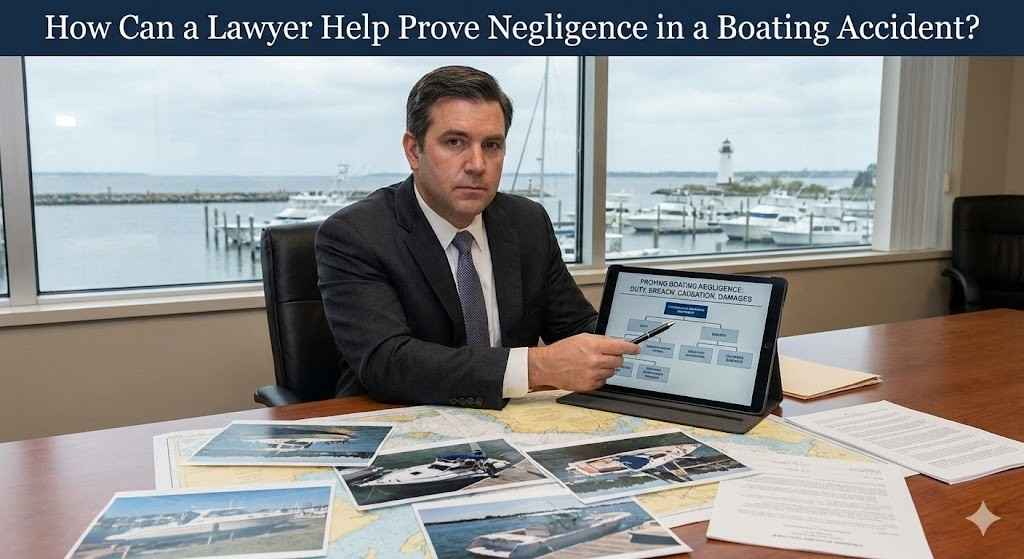
Boating accidents can cause serious injuries, financial loss, and emotional stress. Proving negligence after such an accident often feels overwhelming, especially when multiple parties and complex laws are involved. This is where an experienced lawyer plays a critical role.
A lawyer does more than file paperwork. They build a clear case that shows who acted carelessly, how that carelessness caused harm, and why compensation is justified. This article explains, step by step, how a lawyer helps prove negligence in a boating accident.
Understanding Negligence in a Boating Accident
Negligence means failure to act with reasonable care. In boating accidents, this often involves unsafe operation, lack of maintenance, or ignoring maritime rules.
To prove negligence, four elements must exist. These include duty of care, breach of that duty, causation, and damages. Missing even one element weakens the claim.
A lawyer understands how to connect these elements. They turn facts into a legally sound argument.
Establishing the Duty of Care
The first step involves proving duty of care. Boat operators owe a duty to passengers, other boaters, and swimmers. They must operate vessels safely and follow navigation rules.
A lawyer identifies who owed this duty. This could include the boat operator, owner, rental company, or even a manufacturer.
By establishing duty clearly, the lawyer lays the foundation for the entire case.
Proving a Breach of Duty
Once duty exists, the next step is showing breach. A breach occurs when someone fails to act responsibly.
Lawyers gather evidence that shows unsafe behavior. This may include speeding, operating under the influence, distracted driving, or ignoring weather warnings.
They compare actions against boating laws and safety standards. If behavior falls below these standards, breach becomes clear.
Collecting and Preserving Evidence
Evidence determines case strength. Lawyers know what evidence matters and how to protect it.
They collect accident reports, photographs, videos, and witness statements. They may also secure boat maintenance records and navigation data.
Quick action matters. Evidence disappears fast in boating accidents. A lawyer acts early to preserve critical details.
Analyzing Accident Scene and Conditions
Boating accidents depend heavily on environment. Water conditions, visibility, and weather all influence outcomes.
A lawyer examines these factors closely. They review weather reports, tide data, and waterway conditions at the time of the accident.
This analysis helps explain how negligence caused the incident, not just that it occurred.
Working With Accident Reconstruction Experts
Some cases require technical insight. Lawyers often work with accident reconstruction experts.
These experts analyze vessel speed, angles, and impact forces. They recreate how the accident happened step by step.
Expert findings strengthen causation. They show how negligent actions directly led to injuries or damage.
Proving Causation Clearly
Causation links negligence to harm. Without it, claims fail.
Lawyers connect evidence to injuries. They show that the accident, not another factor, caused the damage.
Medical records, expert opinions, and timelines support this connection. Clear causation increases the chance of fair compensation.
Documenting Injuries and Damages
Damages include medical bills, lost income, pain, and property loss. Lawyers help document all losses accurately.
They gather medical reports, treatment plans, and expert evaluations. They also calculate future costs and long-term impact.
Complete damage documentation shows the true cost of negligence. It strengthens settlement and trial outcomes.
Identifying All Liable Parties
Boating accidents often involve multiple parties. Responsibility may extend beyond the operator.
Lawyers investigate boat ownership, rental agreements, and maintenance responsibilities. They may also examine manufacturer defects or marina negligence.
Identifying all liable parties increases recovery options. It ensures no responsible party escapes accountability.
Handling Insurance Companies
Insurance companies aim to reduce payouts. They may dispute liability or minimize damages.
Lawyers manage all communication with insurers. They prevent harmful statements and push back against unfair tactics.
Experienced negotiation protects the client’s interests. It often leads to stronger settlements.
Using Boating Laws and Regulations Effectively
Boating laws differ from road traffic laws. Many people do not understand maritime or local waterway rules.
Lawyers apply these laws correctly. They cite violations that support negligence claims, such as intoxication limits or navigation rules.
Legal knowledge turns violations into compelling evidence.
Managing Comparative or Contributory Negligence Claims
Defendants often argue shared fault. They may claim the injured person caused or contributed to the accident.
Lawyers counter these arguments with evidence. They reduce assigned fault or eliminate it entirely.
Managing shared fault protects compensation. It prevents unfair blame shifting.
Preparing for Settlement or Trial
Most boating accident cases settle. However, preparation for trial strengthens negotiation power.
Lawyers build cases as if trial is certain. They organize evidence, expert testimony, and legal arguments.
This readiness signals strength. It often leads to better settlement offers.
Meeting Legal Deadlines and Procedures
Every claim faces strict deadlines. Missing them can end a case instantly.
Lawyers track filing deadlines and procedural requirements. They ensure compliance with all legal rules.
This protection prevents costly mistakes and preserves the right to compensation.
Advising Clients Throughout the Process
Legal processes confuse many people. Lawyers guide clients at every step.
They explain options, risks, and expected outcomes. They provide realistic assessments and strategic advice.
Clear guidance reduces stress. It helps clients make informed decisions.
Strengthening Credibility and Case Presentation
Judges and insurers evaluate credibility carefully. Lawyers present cases clearly and professionally.
They organize facts into logical narratives. They highlight consistency and reliability.
Strong presentation increases trust. It improves chances of success.
Protecting Clients From Legal Pitfalls
Statements, social media posts, or delays can hurt claims. Many people unknowingly damage their cases.
Lawyers warn clients about these risks. They provide instructions to protect legal standing.
This protection preserves case strength from start to finish.
Maximizing Compensation Outcomes
The ultimate goal involves fair compensation. Lawyers calculate realistic claim value based on evidence.
They negotiate aggressively when justified. They reject low offers that fail to cover losses.
Maximized outcomes help clients recover financially and emotionally.
Final Thoughts
Proving negligence in a boating accident requires more than pointing blame. It demands evidence, legal knowledge, and strategic action. A lawyer brings all these elements together.
From gathering proof to handling insurers and building legal arguments, a lawyer strengthens every part of the case. Their involvement increases clarity, credibility, and compensation potential.
When injuries and losses matter, professional legal support turns uncertainty into action and protects your right to justice.

Hi, I’m Gudda Singh Rauthan, but most people call me Gudda. Originally from Jaspur, Uttarakhand, my journey has been full of struggles and learning. I’ve worked in various fields, from factory labor to the BPO industry, and along the way, I discovered my love for writing. Through this blog, I share my experiences and insights to help others build a winning mindset and stay motivated, no matter the challenges they face.