
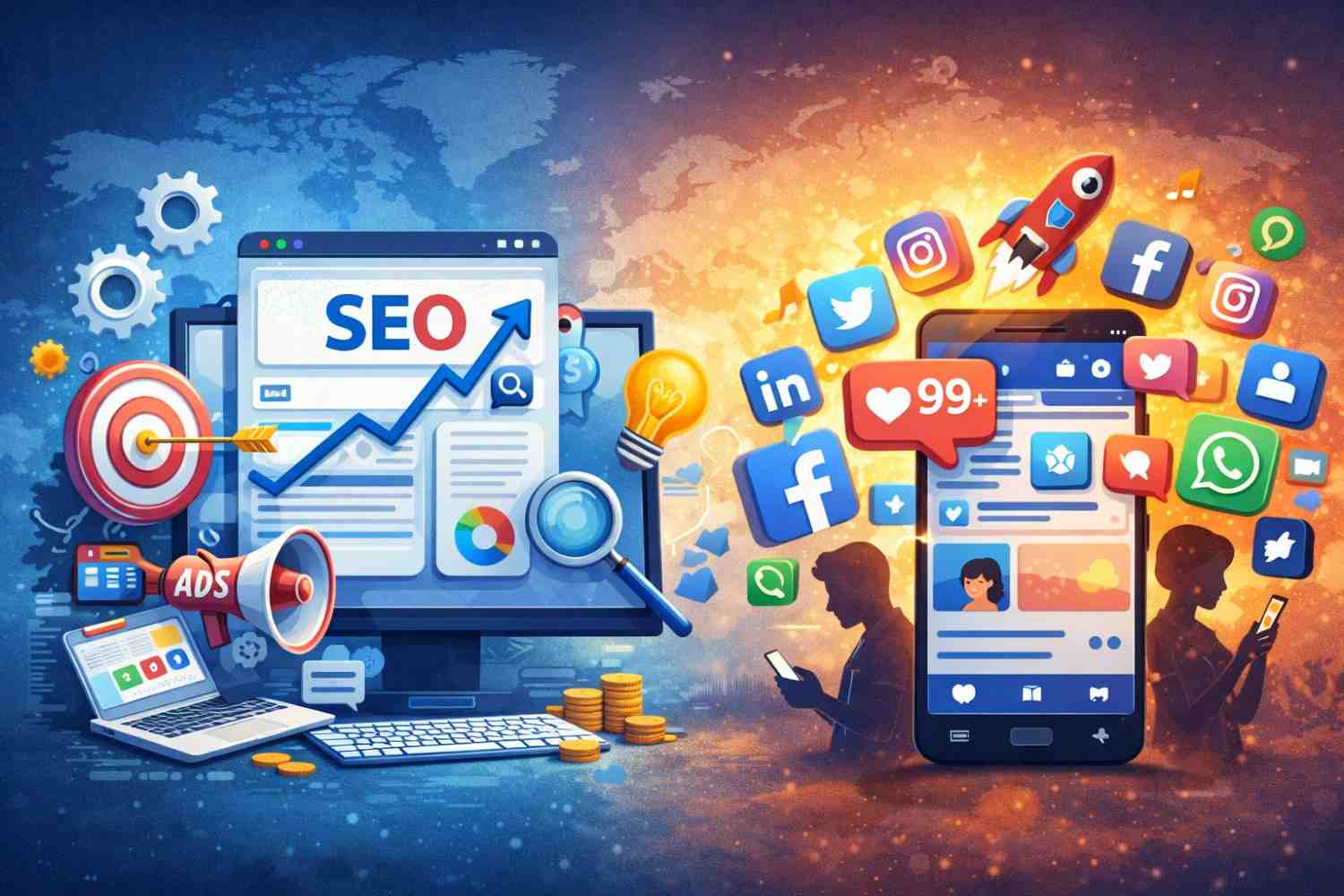
The digital world never stays still. What worked five years ago feels outdated today. Brands now fight for attention in faster, louder spaces. This shift has pushed marketing from classic SEO into social media–driven visibility.
This change did not happen overnight. It grew from user behavior, technology, and trust. People no longer search only on Google. They search on Instagram, TikTok, YouTube, and even LinkedIn.
Understanding this shift is key. Businesses that adapt grow faster. Those that ignore it slowly fade.
The Early Power of SEO
Search Engine Optimization once ruled digital marketing. Ranking on the first page meant steady traffic. Websites lived or died by keywords and backlinks.
SEO focused on intent. Users typed questions into search engines. Brands answered with optimized content. The system felt logical and predictable.
Long-form articles performed well. Evergreen content built authority over time. Traffic came in daily without paid ads.
SEO rewarded patience. Results took months, but they lasted. This made it perfect for blogs, service pages, and niche websites.
Why SEO Alone Is No Longer Enough
Search behavior has changed. Users want fast answers. Many prefer visuals over text.
Google itself has evolved. Featured snippets reduce clicks. AI summaries answer questions before users visit a site. Organic traffic has become harder to earn.
Competition also increased. Almost every brand understands SEO now. Ranking for common keywords feels crowded and expensive.
SEO still matters. But it no longer works alone. Brands need other channels to support visibility.
This is where social media steps in.
The Rise of Social Media as a Search Tool
Social platforms are no longer just for connection. They are discovery engines.
Users search hashtags on Instagram. They explore trends on TikTok. They watch tutorials on YouTube instead of reading blog posts.
Gen Z leads this shift. Many of them search TikTok before Google. They trust creators more than websites.
Social media delivers instant results. Content appears in seconds. Engagement happens in real time.
This speed changed how brands communicate. Static content lost power. Dynamic storytelling took its place.
Attention Has Moved From Pages to Feeds
SEO pulls users to websites. Social media pushes content to users.
This difference matters. On social platforms, users do not search with intent. They scroll until something grabs them.
The feed decides visibility. Algorithms reward watch time, saves, shares, and comments. Content must earn attention quickly.
The first three seconds matter. Headlines alone are no longer enough. Visual hooks now drive success.
This forced brands to simplify their message. Clear value must appear instantly.
How Content Strategy Has Changed
SEO content focuses on depth. Social media content focuses on impact.
Blogs explain topics fully. Social posts highlight one strong idea. Both have value, but they serve different goals.
SEO builds long-term authority. Social media builds short-term momentum. Smart brands combine both.
A blog post can become many social posts. A short video can lead users to a full article. This creates a content ecosystem.
Content no longer lives in one place. It travels across platforms in different forms.
The Role of Personal Branding
SEO often hides the person behind the content. Social media does the opposite.
People follow people, not logos. Faces build trust faster than websites. This shift made personal branding powerful.
Creators now outrank companies in influence. A single expert can drive more traffic than a corporate blog.
Authenticity matters more than polish. Raw videos often perform better than perfect ones. This human touch builds connection.
Brands now partner with creators. Influence has become decentralized.
Social Proof Beats Rankings
SEO once relied on authority signals. Social media relies on social proof.
Likes, comments, and shares show credibility. Reviews and testimonials spread faster on social platforms.
Users trust peer feedback. They value real experiences over optimized claims. This trust shapes buying decisions.
A viral post can outperform a top-ranking page. Reach now depends on engagement, not just keywords.
This forces brands to listen. Conversations matter more than control.
Algorithms vs Search Engines
Search engines rank based on relevance and authority. Social algorithms rank based on behavior.
They track how users interact with content. They measure pauses, rewatches, and reactions. Content must feel engaging, not just informative.
This makes social media unpredictable. A small account can outperform a big one. Creativity often beats budget.
SEO rewards consistency. Social media rewards experimentation. Both require strategy, but the rules differ.
Understanding these systems is essential for growth.
The Decline of Passive Consumption
SEO content supports passive reading. Social media encourages active interaction.
Users comment, share, and remix content. They become part of the message. This creates community instead of audience.
Brands must respond quickly. Silence feels distant. Engagement builds loyalty.
This shift changes tone. Formal language feels cold. Conversational language feels natural.
Marketing now feels like dialogue, not broadcast.
Video Has Taken the Lead
Text once dominated SEO. Video now dominates social media.
Short-form video performs best across platforms. It delivers emotion, clarity, and speed.
People remember visuals more than words. Video builds trust faster. It shows tone, confidence, and personality.
Even search engines prioritize video results. YouTube videos often rank above blog posts.
This forces content creators to adapt. Writing alone is no longer enough.
SEO Still Powers the Foundation
Despite the shift, SEO still matters. It supports credibility and depth.
Websites act as digital homes. Social media platforms are rented spaces. Algorithms change without warning.
SEO content provides stability. It captures users ready to convert. It supports long-term growth.
The smartest brands use SEO as the base. Social media acts as the amplifier.
Together, they create balance.
How Brands Can Bridge SEO and Social Media
The key is integration. Content should work across channels.
Start with one strong idea. Turn it into a blog post. Break it into social clips. Share it across platforms.
Use SEO data to guide social topics. Use social feedback to refine SEO content.
Keywords reveal demand. Comments reveal emotion. Both matter.
This loop improves relevance and reach.
The Future of Digital Visibility
The future favors adaptability. Platforms will keep changing. User behavior will continue to evolve.
AI will influence both SEO and social media. Automation will increase. Human connection will still win.
Brands that stay flexible will thrive. Those stuck in old systems will struggle.
Visibility will depend on trust, clarity, and value. Not just rankings or followers.
The goal remains the same. Be found. Be remembered. Be chosen.
Final Thoughts
The journey from SEO to social media reflects a deeper shift. It shows how humans consume information today.
People want speed, honesty, and connection. They want to feel understood. Platforms that deliver this will lead.
SEO built the internet’s structure. Social media brings it to life.
Success no longer comes from choosing one. It comes from mastering both.
Those who adapt will stay visible. Those who resist will disappear.

Hi, I’m Gudda Singh Rauthan, but most people call me Gudda. Originally from Jaspur, Uttarakhand, my journey has been full of struggles and learning. I’ve worked in various fields, from factory labor to the BPO industry, and along the way, I discovered my love for writing. Through this blog, I share my experiences and insights to help others build a winning mindset and stay motivated, no matter the challenges they face.