
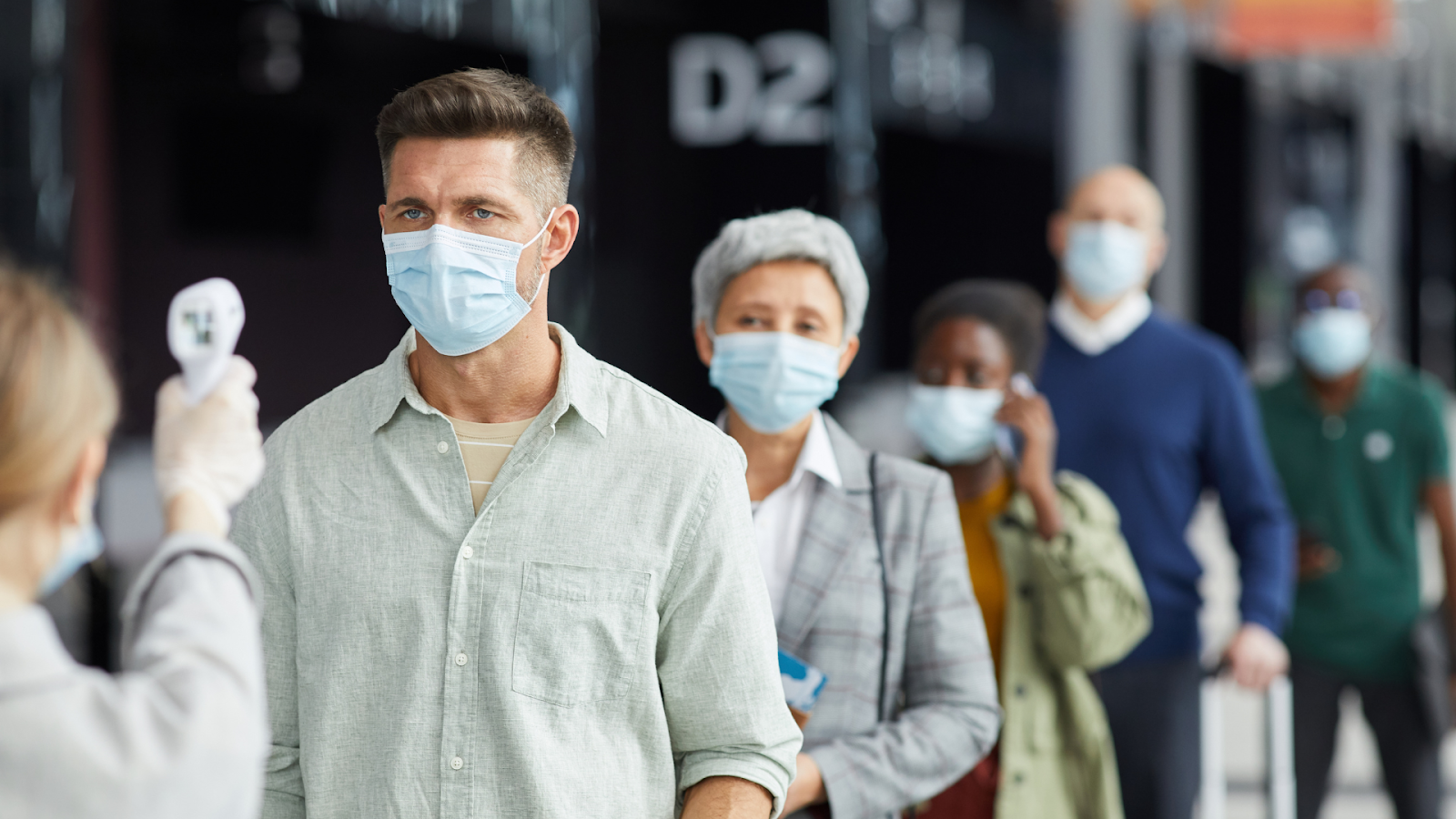
The way we travel for work has changed forever. In a post-pandemic world, health and safety are no longer just nice-to-have,they’re top priorities for businesses and travelers alike. Artificial intelligence (AI) is stepping in to help companies navigate this new reality, making trips safer, smoother, and more efficient. From monitoring health risks and predicting crowded spaces to automating contactless check-ins and personalizing safety alerts, AI is transforming every step of the business travel experience.
In this blog, we’ll explore how these smart technologies are reshaping travel, protecting employees, and helping companies stay prepared, so business trips are not only productive but also worry-free.
Putting AI Health Screening and Verification Into Action
Theory means nothing without execution. Companies are learning that travel safety technology performs best when it’s woven throughout every step of the travel experience.
Staying Connected Globally with AI-Enhanced eSIM Technology
Here’s what catches companies off guard: even your most sophisticated AI health monitoring completely fails without dependable global connectivity. When your people touch down in foreign countries, they need immediate network access for real-time safety alerts, health app functionality, and emergency contact. To solve this challenge, smart organizations now encourage travelers to buy esim online before departing, guaranteeing their devices connect instantly upon landing without scrambling for local SIM cards or getting hammered by roaming charges.
AI-optimized network selection ensures these systems consistently pick the strongest carrier for emergency communications and safety tracking. This uninterrupted connectivity powers health apps to broadcast urgent alerts, enables location tracking to work properly, and keeps telemedicine platforms available when travelers need medical advice abroad.
Automating Health Checks Before Anyone Leaves
AI chatbots now run thorough health assessments that adapt based on answers, destinations, and current global conditions. With appropriate permissions, these systems connect to electronic health records, catching potential problems before anyone books flights. Vaccination verification runs automatically, comparing requirements against destination rules.
Automated medical clearance processes still involve physician review when necessary, but they’ve slashed processing from days down to hours. This speed matters when plans shift suddenly or urgent trips arise.
How Business Travel Safety Has Been Completely Reimagined
The transformation in business travel health and safety runs much deeper than mask mandates and sanitizer dispensers everywhere. Organizations are fundamentally overhauling how they safeguard people away from home.
More Than Just COVID: Why You Need Intelligent Threat Monitoring Now
Here’s what keeps travel managers up at night: we’re juggling multiple threats simultaneously now. Your employees aren’t just facing one virus,they’re navigating various disease outbreaks, drug-resistant infections, and climate-driven health emergencies all at once. Get this: research indicates that 25%-30% of business trips have low value, meaning you absolutely cannot justify sending staff into hazardous conditions without compelling reasons.
Weather extremes have become legitimate health hazards. Heat waves kill. Wildfire smoke destroys air quality. Natural disasters strike without warning. And let’s talk about something companies ignored for too long,mental health deterioration among frequent travelers is spiking as burnout becomes epidemic. These multiplying dangers expose a harsh truth: your previous risk playbook won’t keep anyone safe anymore.
Why Your Current Risk Management System Is Failing You
Static risk reports? Outdated instantly. Manual tracking systems? Completely overwhelmed when threats pop up across 190+ countries at once. The chasm between your duty of care responsibilities and what your existing technology can actually deliver has grown into a canyon.
Remember when COVID first exploded? Traditional systems imploded spectacularly. Travel managers lost track of their people. Policies couldn’t adapt to restrictions changing hourly. Communication fell apart. Companies discovered something terrifying: human analysis can’t possibly react fast enough when disasters unfold within hours instead of weeks.
The AI Technologies Actually Protecting Travelers Right Now
So what’s replacing these failed approaches? AI in business travel isn’t hype,it’s genuinely revolutionizing how organizations protect their workforce.
Predictive Analytics That See Around Corners
Machine learning algorithms currently monitor over 200 risk categories at once, spotting patterns human analysts would never catch. These systems pull data from WHO, CDC, and regional health agencies, but they go further. Way further. They’re forecasting health threats before official warnings drop by analyzing hospital admission spikes, social media signals, and local news patterns.
The technology builds custom risk profiles for each traveler based on their medical background, destination vulnerabilities, and trip objectives. Imagine assigning a dedicated risk specialist to every single person who travels for your company.
Smart Geofencing That Knows What’s Happening Around Your People
Knowing your travelers’ locations isn’t sufficient anymore,you need instant context about threats surrounding them right now. AI-driven geofencing establishes dynamic risk zones that refresh continuously as situations evolve. Privacy-preserving tracking delivers proximity warnings for medical facilities, outbreak areas, and safe locations without trampling employee privacy.
These systems plug directly into mobile devices, delivering immediate location-based guidance exactly when travelers need help. The best part? Everything runs automatically, with zero manual work from your already-swamped travel managers.
Building Complete AI-Powered Risk Management Systems
Individual screening tools matter, but corporate travel risk management demands comprehensive frameworks governing entire operations. Organizations are constructing systems that automate policy enforcement while preserving flexibility for special circumstances.
Policies That Update Themselves and Enforce Intelligently
Travel policies that self-update based on evolving conditions eliminate the endless revision treadmill that paralyzes traditional programs. AI systems create customized recommendations for individual traveler profiles,what’s green-lit for one employee might be red-flagged for another depending on their specific risk factors and trip rationale.
Automated approval processes use risk-based logic, escalating high-risk trips for human judgment while fast-tracking routine travel. Compliance tracking runs nonstop, with anomaly detection intercepting policy breaches before they escalate into serious incidents.
Evaluating Vendors and Selecting Safe Partners
Not every hotel maintains identical health standards. AI evaluation platforms score properties based on cleaning protocols, air circulation systems, and health violation records. Here’s an interesting data point: according to a survey conducted by GBTA, 90% of respondents were more or equally interested in taking bleisure trips compared to pre-pandemic times, which means you need robust vendor vetting for extended stays mixing work and personal time.
Ground transport companies, dining establishments, and event venues all get safety ratings. Automated vendor compliance tracking monitors certifications and raises red flags before travelers show up. This is post pandemic business travel planning that finally matches today’s complex risk landscape.
Cutting-Edge AI For New Travel Patterns
Basic frameworks only scratch the surface. Progressive organizations are deploying AI for travel scenarios that barely existed before 2020.
Optimizing Travel for Hybrid Work Models
Bleisure trips and workations create distinctive challenges. AI evaluates these hybrid scenarios differently than conventional business trips, examining extended stays and recreational activities for health exposure. Remote work location analysis weighs everything from healthcare access to political stability. Family accompaniment has grown more common as companies realize work-life balance drives retention. AI helps design policies protecting traveling families while managing the extra liability implications.
Supporting Mental Health and Wellness Through AI
Travel exhaustion isn’t just annoying,it’s genuinely dangerous. AI identifies behavioral patterns signaling stress or burnout through booking behaviors, trip frequency, and journey length. Proactive wellness interventions recommend breaks between trips or shortened itineraries when algorithms spot worrying trends.
Stress tracking via wearable technology (with consent) triggers resource suggestions before small concerns become major crises. Systems even deliver culturally-appropriate mental health resources based on traveler locations.
Your Burning Questions About AI Travel Safety
- How does AI actually improve protection versus traditional methods?
AI digests thousands of data sources simultaneously, identifying threats hours or days ahead of human analysts. It scales infinitely,tracking one person or one thousand with identical effectiveness,while humans can only manually monitor limited numbers. - What’s the real financial commitment for these systems?
Investment spans from $10,000-$50,000 yearly for smaller programs to $500,000+ for multinational enterprises, but ROI typically materializes within 12-18 months through avoided incidents, lower insurance costs, and fewer travel disruptions. - How do AI platforms safeguard traveler privacy?
End-to-end encryption, consent management structures, and data minimization principles guarantee GDPR and CCPA compliance. Employees control what health information gets shared, and systems use anonymization for collective analytics.
What This Means for Your Travel Program
The question facing you isn’t whether to adopt AI for travel health and safety,it’s how fast you can roll it out. Companies hanging onto manual processes are gambling with employee wellbeing and corporate liability. The technology already exists to forecast threats, automate responses, and protect travelers proactively instead of scrambling reactively. Your competitors are implementing these systems right now. The genuine cost isn’t the implementation,it’s what happens to your organization when you delay.

Hi, I’m Gudda Singh Rauthan, but most people call me Gudda. Originally from Jaspur, Uttarakhand, my journey has been full of struggles and learning. I’ve worked in various fields, from factory labor to the BPO industry, and along the way, I discovered my love for writing. Through this blog, I share my experiences and insights to help others build a winning mindset and stay motivated, no matter the challenges they face.