
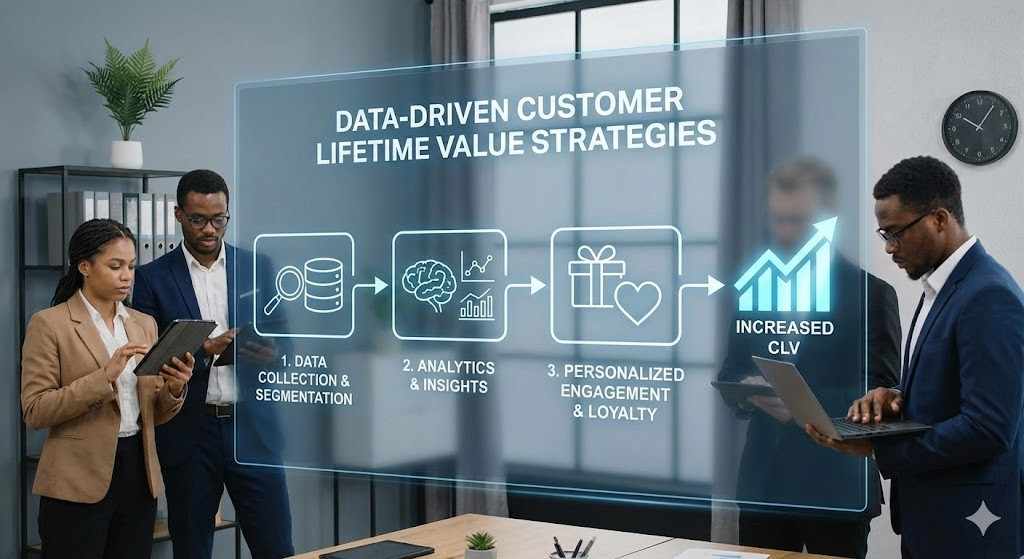
Customer acquisition costs keep rising. Retention now drives real growth. In 2026, businesses that win focus on customer lifetime value, not one-time sales.
Customer Lifetime Value, or CLV, measures the total revenue a customer generates over time. Higher CLV means stronger relationships, better margins, and predictable revenue. Data-driven strategies make this possible at scale.
This guide explains how to increase customer lifetime value using data. It focuses on practical actions, not theory. Each strategy helps you build long-term value with real customers.
Understand Customer Lifetime Value Clearly
You cannot improve what you do not understand. CLV shows how much a customer is worth over their entire relationship with your brand. It combines purchase value, purchase frequency, and retention time.
Data helps you calculate CLV accurately. It reveals which customers drive profit and which drain resources. This clarity guides smarter decisions.
When teams align around CLV, strategies shift. Short-term tactics give way to long-term growth.
Centralize Customer Data First
Scattered data limits insight. Many businesses store customer data across tools and teams. This creates blind spots.
Start by centralizing data into one system. Combine transaction history, behavior data, support interactions, and engagement metrics. Clean and standardize this data.
A unified view reveals patterns. It shows how customers move across the lifecycle. Strong data foundations enable every other strategy.
Segment Customers Based on Value
Not all customers deliver equal value. Treating them the same reduces efficiency. Segmentation solves this problem.
Use data to group customers by CLV, behavior, and engagement. Common segments include high-value loyalists, new buyers, and at-risk customers.
Each segment needs a different approach. High-value customers need retention and rewards. At-risk customers need intervention. Segmentation increases relevance and impact.
Personalize Experiences at Every Touchpoint
Personalization drives retention. Generic experiences push customers away. Data makes personalization scalable.
Use browsing history, purchase behavior, and preferences to tailor messaging. Personalize emails, product recommendations, and offers.
Relevant experiences increase satisfaction. Customers feel understood. This emotional connection boosts loyalty and lifetime value.
Optimize Onboarding Using Behavioral Data
First experiences shape long-term behavior. Poor onboarding leads to churn. Data highlights where users drop off.
Track onboarding steps and engagement signals. Identify friction points. Improve guidance, timing, and content.
Strong onboarding builds confidence. Customers learn value quickly. Early success increases long-term retention.
Use Predictive Analytics to Reduce Churn
Churn rarely happens suddenly. Data reveals warning signs. Predictive models identify customers at risk before they leave.
Monitor changes in usage, purchase frequency, and support tickets. Set thresholds for intervention. Trigger proactive outreach.
Early action saves relationships. Retained customers add far more value than new acquisitions.
Increase Purchase Frequency With Smart Triggers
Repeat purchases drive CLV. Data helps you time outreach correctly. Poor timing feels spammy.
Use purchase cycles to trigger reminders. Recommend complementary products based on behavior. Offer incentives when intent is high.
Timely messages feel helpful. They increase conversion without pressure. Higher frequency leads to higher lifetime value.
Improve Customer Support Using Data Insights
Support interactions shape perception. Slow or poor support reduces trust. Data reveals recurring issues and response gaps.
Analyze ticket volume, resolution time, and satisfaction scores. Identify patterns and bottlenecks. Fix root causes.
Proactive support improves loyalty. Customers stay longer when they feel supported. Strong support boosts CLV indirectly.
Leverage Feedback to Guide Improvements
Customer feedback contains valuable signals. Ignoring it wastes opportunity. Data-driven teams listen closely.
Collect feedback through surveys, reviews, and support logs. Analyze trends, not just individual comments. Prioritize recurring issues.
Acting on feedback builds trust. Customers see improvement. This responsiveness strengthens long-term relationships.
Build Loyalty Programs Based on Real Behavior
Many loyalty programs fail due to poor design. Data fixes this. Effective programs reward meaningful behavior.
Identify actions that correlate with high CLV. Reward repeat purchases, referrals, and engagement. Avoid vanity rewards.
Behavior-based loyalty programs feel fair. They encourage habits that increase lifetime value.
Upsell and Cross-Sell With Precision
Upselling without data annoys customers. Smart upselling adds value. Data reveals what customers actually need.
Analyze purchase history and usage patterns. Recommend upgrades or add-ons at the right moment. Keep suggestions relevant.
Helpful recommendations increase order value. They also improve satisfaction. Both outcomes raise CLV.
Use Cohort Analysis to Track Long-Term Trends
Cohort analysis shows how behavior changes over time. It groups customers by signup date or first purchase.
Track retention, spend, and engagement by cohort. Compare performance across periods. Identify what improves or hurts CLV.
Cohort insights guide strategy. They reveal which changes drive long-term value.
Optimize Pricing Using Customer Data
Pricing affects retention and value. Too high drives churn. Too low limits growth. Data informs balance.
Analyze price sensitivity across segments. Test bundles, subscriptions, or tiered pricing. Measure impact on CLV.
Data-backed pricing feels fair. It maximizes revenue without sacrificing loyalty.
Invest in High-CLV Customer Relationships
High-CLV customers deserve special attention. They drive a large share of revenue. Data helps identify them early.
Offer exclusive benefits, early access, or dedicated support. Strengthen emotional bonds.
Protecting high-value relationships stabilizes revenue. It reduces dependency on constant acquisition.
Align Marketing and Product Teams Around CLV
Silos hurt lifetime value. Marketing may chase clicks. Product teams may chase features. CLV aligns goals.
Share CLV metrics across teams. Use them to evaluate campaigns and product decisions. Focus on long-term impact.
Aligned teams make better decisions. They prioritize sustainable growth over short wins.
Automate Lifecycle Marketing With Data
Manual campaigns do not scale. Automation powered by data does. Lifecycle marketing delivers the right message at the right time.
Set automated flows for onboarding, re-engagement, and retention. Trigger actions based on behavior, not guesses.
Automation improves consistency. It supports customers throughout their journey. This continuity boosts CLV.
Track the Right Metrics Continuously
CLV improvement requires monitoring. One-time analysis is not enough. Ongoing tracking reveals progress.
Monitor retention rate, average order value, purchase frequency, and churn. Link these metrics to CLV changes.
Continuous measurement enables optimization. It keeps strategies aligned with results.
Test and Iterate Using Experiments
Assumptions limit growth. Testing removes guesswork. Data-driven experimentation improves outcomes.
Run A/B tests on messaging, offers, and experiences. Measure impact on retention and spend. Scale what works.
Iteration refines strategy. Small gains compound over time. CLV grows steadily.
Ensure Data Privacy and Trust
Data use requires responsibility. Trust affects retention. Customers expect transparency.
Follow data protection standards. Explain how data improves experience. Give customers control.
Trust strengthens relationships. Ethical data use supports long-term value.
Final Thoughts
Increasing customer lifetime value requires focus, data, and discipline. It is not about quick wins. It is about building lasting relationships.
Data-driven strategies reveal what customers need and when they need it. They guide personalization, retention, and growth. They replace guesswork with clarity.
In 2026, competitive advantage comes from understanding customers deeply. Businesses that invest in data-driven CLV strategies build stronger brands, steadier revenue, and long-term success.

Hi, I’m Gudda Singh Rauthan, but most people call me Gudda. Originally from Jaspur, Uttarakhand, my journey has been full of struggles and learning. I’ve worked in various fields, from factory labor to the BPO industry, and along the way, I discovered my love for writing. Through this blog, I share my experiences and insights to help others build a winning mindset and stay motivated, no matter the challenges they face.