
How do researchers keep pace with pathogens that won’t hold still? It’s brutal, honestly. Real mutations. Real time. No pause button. Researchers tear apart their own methods, retool their technologies, and rebuild strategies, sometimes mid-crisis, just to stay relevant. A virus rewrites its own code. A bacterial strain shrugs off a drug that once killed it without effort. The scientific community has no choice. That grinding push-and-pull between disease and discovery is what keeps reshaping medicine from the ground up, season after season.
Understanding Disease Evolution and Mutation
Diseases don’t sit still. Influenza reshuffles its genetic material year after year, which is precisely why flu shots need reformulating every single season. Bacteria, meanwhile, learn to survive antibiotic exposure through repeated drug contact, producing what public health experts call antibiotic resistance. Something that worked against a pathogen five years ago may be useless now. So scientists run surveillance systems pulling genetic sequences from patients across the globe, assembling a constantly refreshed map of how pathogens drift and transform. Without that foundation, research would be shooting blind.
Advanced Diagnostic Tools and Technology
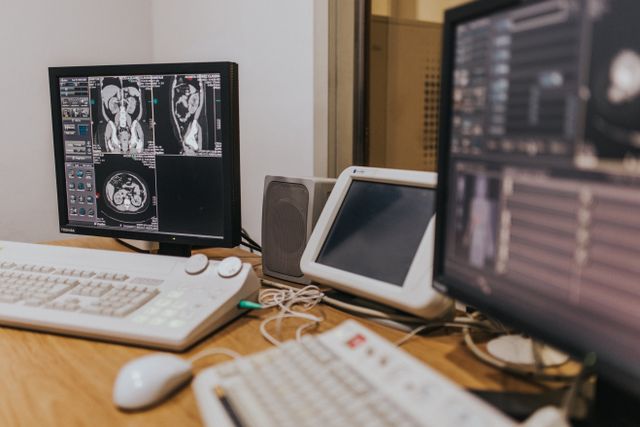
The tools used to identify disease have shifted dramatically. DNA sequencing once took months and cost millions. Now, it can often be completed in hours at a fraction of the price. Real-time polymerase chain reaction, or RT-PCR, lets researchers detect and quantify genetic material with striking precision. Advanced CT and MRI technology exposes disease at the cellular level, revealing detail that was simply out of reach not long ago. During tissue sample analysis and classification, labs depend on pathology software to handle specimen data accurately and push diagnostic results through efficiently. Speed and accuracy aren’t luxuries here. They’re the whole game when threats keep evolving.
Collaborative Research Networks and Data Sharing
No single lab outruns global disease evolution alone. International networks stitch together laboratories, hospitals, and universities across continents into a shared knowledge base that accelerates discovery considerably. When a new variant surfaces, samples and sequence data move fast, distributed to researchers everywhere before the trail goes cold. Redundant work gets cut. Resources get steered toward the most promising leads. Data-sharing platforms let scientists tap into findings in real time rather than waiting through the long, grinding lag of journal publication cycles. During emergencies, slow information costs lives. The collective intelligence pooled through these networks has repeatedly compressed the gap between identifying a new disease and mounting a practical response.
Adaptation of Vaccine Development Strategies
Vaccine development has been fundamentally rethought. Old methods grew pathogens in lab settings, a process that was slow, laborious, and rigid. Newer approaches use genetic engineering and messenger RNA technology to trigger immunity without ever deploying the actual disease agent. The development timeline has collapsed as a result. Researchers can now design, test, and manufacture candidates in months rather than years. When something new emerges or mutates, platforms and frameworks are already standing by, ready to deploy almost immediately. That’s a genuine structural shift, from reactive medicine to proactive intervention. The mRNA vaccine story during recent global health crises proved the payoff of building these flexible platforms long before any emergency demands them.
Personalized Medicine and Genomic Research
Individual genetic variation has cracked open new treatment territory. People metabolize drugs differently based on their unique genetic makeup, and researchers now build those differences into study designs and clinical trial structures. Genomic analysis flags which patients carry the highest vulnerability to specific diseases and which treatments are most likely to work for a given individual. Cancer care has been transformed most visibly; treatments now target the genetic signature of a specific tumor rather than a broad, blunt disease category. Drug developers go after precise genetic mutations, stepping away from the one-size-fits-all model that historically produced wildly inconsistent outcomes. The shift toward personalized medicine is really a broader acknowledgment: diseases vary from person to person, and the science has to vary accordingly.
Conclusion
Evolving diseases and advancing scientific methods, the tension between them defines modern research. Pathogens develop resistance. Viruses mutate. Scientists respond with faster diagnostics, tighter international collaboration, and new treatment philosophies such as personalized medicine and agile vaccine platforms. That cycle isn’t slowing down. It will likely shape medicine for generations. But winning requires more than intelligence and funding. It demands genuine flexibility, a real willingness to discard what has stopped working and invest heavily in what is emerging. The future of health hinges on how fast and how decisively the scientific community moves when diseases, inevitably, change again.

Hi, I’m Gudda Singh Rauthan, but most people call me Gudda. Originally from Jaspur, Uttarakhand, my journey has been full of struggles and learning. I’ve worked in various fields, from factory labor to the BPO industry, and along the way, I discovered my love for writing. Through this blog, I share my experiences and insights to help others build a winning mindset and stay motivated, no matter the challenges they face.